Volo UPS2976 precipita in decollo a SDF


Rottura a fatica di un elemento strutturale 70 (settanta) anni dopo il Comet fa impressione, non so se e' proprio cosi' semplice, un elemento viene sottoposto a uno sforzo innumerevoli volte, una frattura cresce senza che nessuno se ne accorga, e poi l'elemento cede.

Ma davvero non ci sono starti controlli di routine che verificano se un elemento sta perdendo la sua integrita'? Non dovrebbe essere una casistica arcifamosa che descrivono alle matricole in qualunque corso di ingegneria come caso di studio? Ma magari ho capito male.

Comunque a me piu' che la terribile spettacolarita' dell'incidente fa impressione se quell'elemento era marcio e nessuno se n'e' accorto.

E vediamo se alcuni degli altri mezzi che sono stati messi a terra hanno lo stesso problema.
 
Ultima modifica:
Aggiornamento dal NTSB


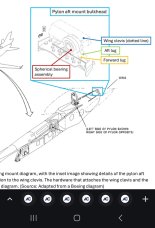
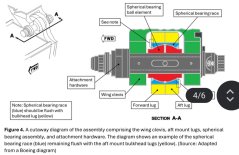
In passato erano stati trovati 4 cuscinetti con problemi, e nel 2011 è uscita una semplice Service Letter
"... bearing failure would not result in a safety of flight condition"


QUOTE:
"In the previously reported events, a total circumferential fracture of the bearing race,
resulting in the bearing race splitting into two pieces, allowed for these two pieces to migrate in the forward and aft directions. The failure of these spherical bearing assemblies was visually identified by observing the displacement of the fractured bearing race pieces beyond the outer surface of the lugs. According to the Service Letter, a review of the spherical bearing failure by Boeing determined
it would not result in a safety of flight condition

...

investigators are reviewing UPS’s incorporation of
the contents of the Service Letter into its Boeing MD-11 maintenance program as well as the
correspondence history between Boeing and the FAA leading up to issuance of the Service Letter
and thereafter.

...

Shortly after 1713:11, the FDR showed that only the No. 1 engine fire parameter changed from “no fire” to “fire,” and the throttle resolver angle (TRA) for the Nos. 2 and 3 engines increased. Subsequently, the speed
values for the low-speed rotor (N1) and high-speed rotor (N2) for the No. 2 engine showed minor perturbations, while the N1 and N2 values for the No. 3 engine increased and remained steady until about 3 seconds before the end of recorded data. The airplane’s groundspeed was about 184 kts
from 1713:11 until about 3 seconds before the end of recorded data at 1713:30.
FDR and other engineering data will be incorporated into the NTSB airplane performance study to understand why the airplane’s altitude did not substantially increase after separation of the left pylon and engine. Additionally, the NTSB airplane performance study will explore the effects of the separation of the left pylon and engine on airplane handling qualities.
 

Allegati

  • Screenshot_20260115_084428_Chrome.jpg
    Screenshot_20260115_084428_Chrome.jpg
    143.4 KB · Visualizzazioni: 27
  • Screenshot_20260115_084445_Chrome.jpg
    Screenshot_20260115_084445_Chrome.jpg
    102.6 KB · Visualizzazioni: 25
  • Like
Reactions: Scarab
Solo a me sembra di capire che stiano cercando di trovare anche altri “fattori” su cui scaricare la colpa?
L’affermazione i motori 2 e 3 spingevano bene e al massimo è la velocità raggiunta e mantenuta era ed è rimasta alta fino allo schianto”, può sembrare un mettere le mani avanti!
 
In che senso?
Non penso che l'NTSB cerchi di "scaricare la colpa" da nessuna parte.
E per quale motivo dovrebbe farlo? Salvare la faccia a Boeing? Compiacere Trump?


Secondo me è giusto indagare anche sul perché l'aereo non sia stato in grado di guadagnare quota.
. In base alle performance in quella situazione, fosse stato "solo" un engine shutdown, l'aereo avrebbe guadagnato quota?
. Quali sono gli impatti "aerodinamici" collegati alla perdita (separation) del pilone e motore? Potrebbero da soli (senza il fuoco) giustificare una riduzione delle performance?
. Il fuoco ha portato a una sufficiente perdita di potenza del motore 2 per spiegare perché l'aereo non ha guadagnato quota? "No. 2 engine showed minor perturbations" mi fa pensare che il fuoco possa aver causato qualche problema sull'aria che alimentava il motore 2. Dal video avrei detto "major perturbations", non immaginavo di leggere questo "minor".

Tutto questo a prescindere dal fatto che serve capire, per esempio, come mai Boeing abbia classificato la rottura dell'anello del cuscinetto come non flight safety!
Anche per verificare se ci sono in giro installazioni simili su altri modelli, e cosa fare.
 
  • Like
Reactions: Dancrane