United-Jetblue


East End Ave

Utente Registrato
13 Agosto 2013
10,004
4,733
su e giu' sull'atlantico...

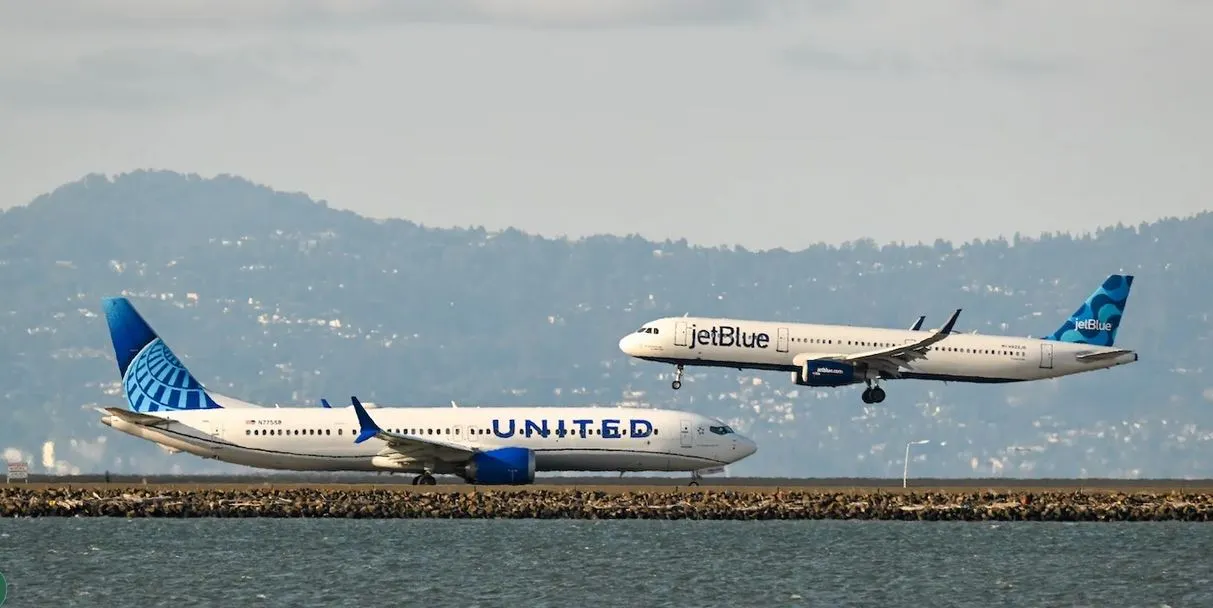
United e Jetblue diventano sorelle: nasce l’alleanza Blue Sky​


Un’alleanza trasversale. O, forse, il primo passo di JetBlue (che non fa parte di alcuna alleanza) verso un ingresso in Star Alliance. E’ l’accordo che la quarta compagnia aerea americana per passeggeri trasportati ha stretto con United Airlines. Sfruttando il nome dell’una e i colori predominanti della livrea di entrambe, United e Jetblue hanno chiamato la partnership ‘Blue Sky’.
Prevede uno ‘scambio’ di slot sugli scali newyorkesi di Newark (dove United ne cederà a Jetblue) e di JFK, dove United farà il suo rientro dopo tre anni di assenza
(avendo una base enorme a Newark, quello di United con il JFK è sempre stato un matrimonio con separazioni e ritorni di fiamma).

Ma, soprattutto, Blue Sky prevede mutui benefici per gli iscritti ai programmi fedeltà Mileage Plus di United e True Blue di Jetblue, che potranno accumulare e spendere miglia/punti indifferentemente con l’uno e con l’altro, inclusi i voli di lungo raggio di United e quelli per l’Europa di Jetblue.

I membri con status godranno degli stessi privilegi con l’uno e con l’altro vettore per quanto riguarda check-in prioritario, priorità ai controlli di sicurezza, baglio in stiva gratuito, riconsegna prioritaria del bagaglio, scelta dei sedili inclusi quelli extra-legroom e cambi /standby nello stesso giorno.

Infine, una volta avviata la partnership, United e JetBlue lanceranno un accordo di interlinea, vendendo i voli l’una dell’altra tramite i rispettivi siti web e app mobili. Ciò significa che sarà possibile prenotare un volo United sul sito di JetBlue (o viceversa) e connettersi senza interruzioni in un unico itinerario tra le due compagnie aeree.


Aggiornamento di ieri, annuncio interno UA: la cosa si fa e smuove equlibri importanti specialmente a NYC:

"We are excited to announce that the U.S. Department of Transportation (DOT) has completed the review of our Blue Sky collaboration with Jet Blue and approved us to proceed to implementation.

We appreciate Secretary Duffy, Assistant Secretary Edwards, and the entire team at the DOT for their review of Blue Sky.

Blue Sky is a new and unique collaboration that gives customers of both airlines even more options to find flights that fit their plans as well as new opportunities to earn and use MileagePlus® miles and TrueBlue points across both airlines. Blue Sky will begin introducing new customer benefits starting this fall, rolling out in phases:

  • MileagePlus customers will be able to earn and use miles on most JetBlue flights. JetBlue’s TrueBlue members will be able to earn and use points for flights on our extensive domestic and international network.
  • Through a traditional interline agreement, each airline will offer flights on one another’s website and app to make booking across the two airlines’ complementary networks simple and easy.
  • The benefits of each airline’s loyalty program — priority boarding, complimentary access to preferred and extra legroom seats and same-day standby/switch — will be available when customers travel on the other airline’s aircraft.
  • JetBlue will provide United access to slots at JFK International Airport for up to seven daily round-trip flights out of JFK Terminal 6 to begin as early as 2027. And, as part of a net-neutral exchange, JetBlue and United will exchange eight flight timings at EWR.
  • We will move our website and mobile app’s ability to sell hotels, rental cars, cruises and travel insurance, on both a stand-alone and package basis, to new technology and services provided by JetBlue’s Paisly platform.
Stay tuned for more! We will share more details in the coming weeks as implementation of the Blue Sky collaboration begins."
 
  • Like
Reactions: londonfog
Sarebbe interessante sapere come United sfrutterà questi slot al JFK, immagino possano aprire qualcosa sul lungo raggio e poi affidarsi a Jetblue per i proseguimenti via JFK. I tempi però sono lunghi, sopra si parla di cessione degli slot a partire dal 2027.
 
Sarebbe interessante sapere come United sfrutterà questi slot al JFK, immagino possano aprire qualcosa sul lungo raggio e poi affidarsi a Jetblue per i proseguimenti via JFK. I tempi però sono lunghi, sopra si parla di cessione degli slot a partire dal 2027.
Le rotte da JFK a LAX e SFO sono infinitamente più redditizie di un paio di intercontinentali isolati da JFK. Tieni presente che JetBlue ha voli a medio/lungo (Europa e Sud America) da JFK e UA ha uno hub ben organizzato a EWR (anche se EWR ha i suoi problemi quest'estate)
 
Scott Kirby ieri: "We're pursuing additional JFK slots beyond those expected from JetBlue, with a goal of 20 daily slots."

Brooklyn e Long Island rimangono un focus assolutamente primario come catchment area, cosi come la presenza nei 3 NY apt's che e' fondamentale per essere NY global carrier.
 
Source : UNITED

Great news for JetBlue and United loyalty members: As part of our Blue Sky collaboration we announced earlier this year, loyalty members of both airlines can now earn and redeem points or miles across each other’s networks.

This milestone delivers our shared vision to create a more rewarding travel experience by giving customers greater flexibility and choice when booking flights with their loyalty currency of choice.

Loyalty earn and redeem across both airlines
Effective today:
  • TrueBlue members can earn points and redeem them for flights across United’s global network, including United Express.
  • MileagePlus members can earn and redeem miles on most flights across JetBlue’s network of top leisure destinations.1
When searching for flights with points or miles on JetBlue or United’s websites and mobile apps, customers will now see flight options across both airlines’ networks—making it easier than ever to turn everyday travel into meaningful rewards.

To earn miles, points and tiles, TrueBlue members can enter their loyalty number when booking United-operated flights on United.com. Similarly, United MileagePlus members can enter theirs when booking JetBlue-operated flights on JetBlue.com.

To redeem points or miles, members should continue booking award travel directly through their respective airline’s website, selecting the option to search with points or miles.2

“With reciprocal earning and redemption now available, Blue Sky is officially taking flight,” we shared in a joint statement. “We’re excited to give our loyalty members the ability to use the program of their choice when traveling across our complementary networks.”

Still to come from Blue Sky
This is just the beginning of our collaboration. Additional customer benefits will continue rolling out in phases, including:

  • Revenue Booking – coming in the first quarter of 2026 – including the ability to book itineraries on either airline using cash or miles/points.
  • Reciprocal perks and benefits – coming in early 2026 – such as priority boarding, preferred and extra legroom seating, and same-day standby and flight changes.
  • United’s travel extras, MileagePlus Travel, to transition to Paisly, LLC – coming in early 2026 – United’s MileagePlus Travel with expanded options for hotels, rental cars, cruises, packages and travel insurance will be powered by JetBlue’s wholly owned travel product company, Paisly.
  • JetBlue’s support for United’s JFK expansion – with access to slots for up to seven daily roundtrips from JetBlue’s new Terminal 6 beginning as early as 2027.
Through these initiatives, Blue Sky aims to create more rewarding, connected and streamlined travel experiences for customers while opening new avenues for growth for both airlines.

1. Some select JetBlue routes are not eligible for MileagePlus accrual and redemption. Available redemption flights will appear on each airline’s booking channels.

2. Redemption seats are capacity-controlled, with limited availability on high demand flights.
 
Jetblue chiude 9 rotte piu altre riduzioni proprio a inizio luglio, in alta stagione estiva, non mi sembra un bel segnale

JetBlue Discontinues 9 Routes in July 2026​


JetBlue in recent schedule update filed service changes from July 2026, as the carrier discontinues 9 routes, including 5 from Newark.

Newark – Aruba Last flight 08JUL26 (schedule filing shows service on 11JUL26 and 18JUL26, however reservations are not available)
Newark – Cancun Last flight 08JUL26
Newark – Punta Cana Last flight 08JUL26
Newark – Santo Domingo Last flight 08JUL26
Newark – Tampa Last flight 08JUL26
Orlando – Manchester NH Last flight 08JUL26
Orlando – San Jose (Costa Rica) Last flight 08JUL26
Providence – San Juan Last flight 09JUL26 (service to resume from 17DEC26)
Tampa – Hartford Last flight 08JUL26

Other Newark service reductions:
Newark – Los Angeleseff 06JUL26 Reduce from 3 to 2 daily
Newark – Orlandoeff 06JUL26 Reduce from 4 to 2 daily

aeroroutes
 
Ultima modifica:
Cesare mi sembra che chiudano rotte per i Caraibi e la Florida, in luglio e agosto è bassa stagione. Non e' cosi' nera come pensi (direi sul grgio molto scuro 😇 😇 :cool:)
mmmmm....diciamo che e' un chiaroscuro?
Perche' e' un bel passo indietro da EWR invece, il che lascia ancora piu' spazio di manovra a UA stessa...mentre era partita una certa logica di network-partnership che dava proprio a Caribe e FL aggiunte importanti di opportunita' da EWR, non eccelse per UA.
Poi pero' e' arrivato il collasso di Spirit e si sono aperte le praterie di FLL...dove B6 potrebbe strutturare il suo primo sistema hub-n-spoke, il tutto con prospettive future interessanti; riassunto abbastanza bene qui, nell'articolo di Live and Let's Fly:

JetBlue Retreats From Newark, Making A United Merger Even More Likely​

Matthew Klint Posted onMay 19, 2026 15 Comments

a plane parked at an airport


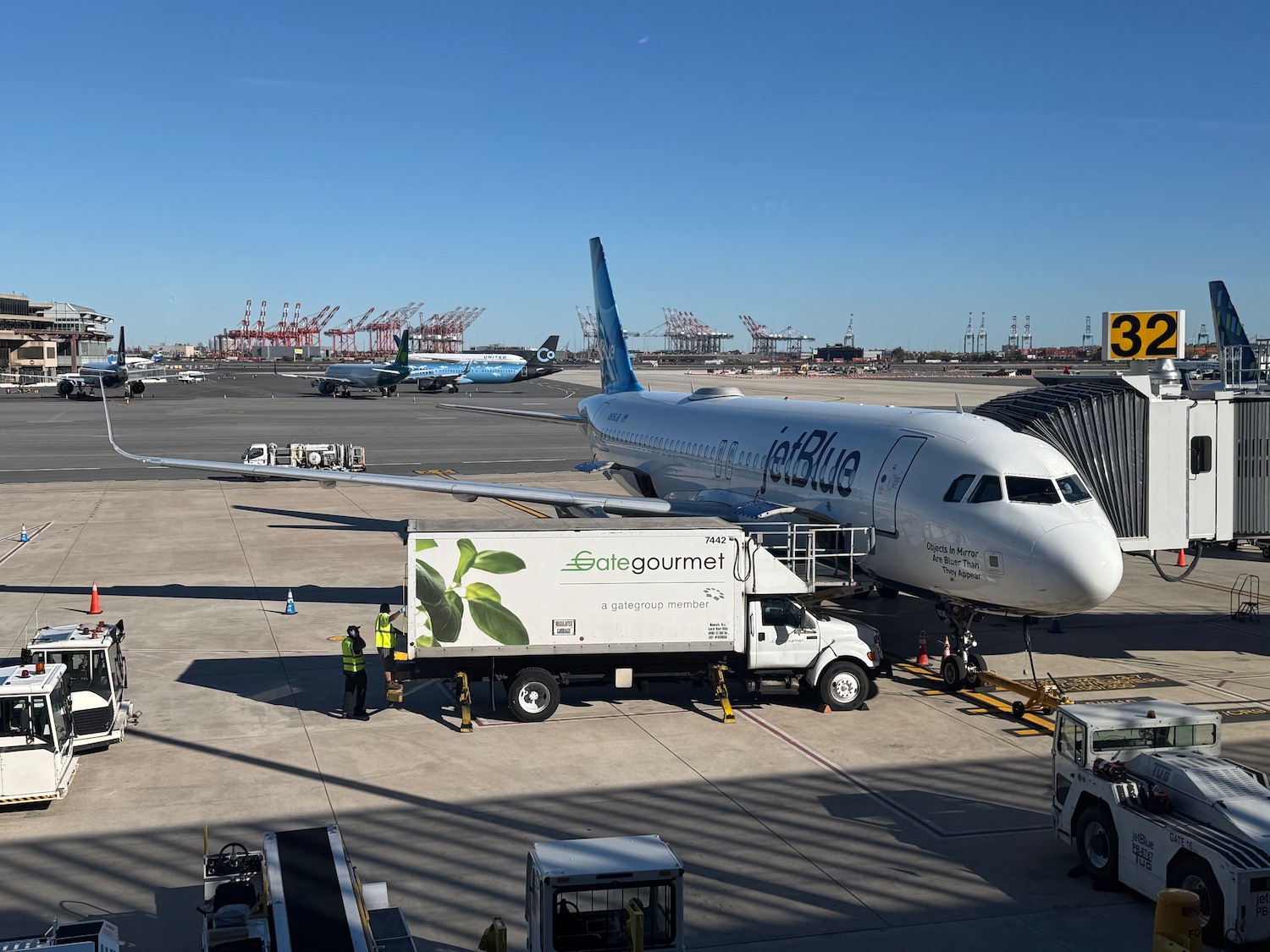
JetBlue is pulling down even more Newark flying, and the message is clear: Newark does not work for JetBlue any more than JFK worked for United. That has implications far beyond a few leisure routes that JetBlue is axing: I sense it is part of a strategy that, at the very least, makes a JetBlue-United merger more tenable.

In This Post:

​

JetBlue is cutting more routes, and Newark (EWR) is taking a particularly hard hit.

The latest reported cuts include Newark service to:

  • Aruba (AUA)
  • Cancun (CUN)
  • Punta Cana (PUJ)
  • Santo Domingo (SDQ)
  • Tampa (TPA)
JetBlue is also cutting Hartford (BDL) – Tampa, Orlando (MCO) – San José (SJO), Providence (PVD) – San Juan (SJU), and all flights from Manchester, New Hampshire (MHT).

This is the latest sign that JetBlue is moving away from marginal outstations and toward places where it can actually build a defensible network. And Newark, despite being a massive New York-area airport, is not that place for JetBlue.

The problem is that Newark is United’s fortress hub. United has the scale, the corporate contracts, the frequent flyer base, the premium traffic, the lounges, the international network, and the schedule utility to make Newark work.

JetBlue has a nice onboard product, but a nice onboard product is not enough when you are competing against a hub carrier with far more frequency and far more revenue depth.

That is especially true at a high-cost airport like Newark. It is hard to make money flying leisure-heavy routes if the airport cost structure is high and you do not have enough premium or connecting revenue to offset it. A $109 fare to Florida or the Caribbean sounds great to consumers, but if the airport costs, aircraft utilization, crew costs, and competitive pressure are too high, the route does not work.

JetBlue can compete at Newark around the edges, but it cannot even come close to competing with United at Newark.

And that brings us to the obvious comparison.

This is the mirror image of United at JFK.

United repeatedly tried to make JFK work without enough scale. It had premium transcontinental flights. It had brand recognition. It had MileagePlus members who wanted JFK. It had a great product on some routes. But without enough slots, United was always a niche player.

Eventually, United walked away from JFK.

That was painful and arguably strategically shortsighted. But the underlying lesson was clear: in the New York market, being present is not the same thing as being relevant.

United was present at JFK. It was not relevant enough.

JetBlue is present at Newark. It is not relevant enough.

That is why these Newark cuts make sense.

In this case, it’s not like JetBlue is simply sinking. As Cranky Flier has pointed out, JetBlue is building Fort Lauderdale into something much closer to a true hub. Historically, JetBlue has not been a classic connecting airline. It has been more of a point-to-point carrier with strong positions in places like New York, Boston, and Fort Lauderdale.

But Fort Lauderdale is different now and being used as a connecting point…there’s even flight banking going on.

With Spirit gone, JetBlue has a rare opportunity to become the dominant carrier at a major South Florida airport with strong leisure, visiting-friends-and-relatives, Caribbean, and Latin America traffic. That is far more interesting than trying to fight United at Newark with a scattered route map and limited scale.

With aircraft are scarce, JetBlue should put them where it can win. Newark is not where JetBlue can win. Fort Lauderdale may be.

The awkward part is that JetBlue is now in bed with United through the Blue Sky partnership.

Under that arrangement, United is returning to JFK with access to JetBlue slots, while the airlines exchange Newark timings and add reciprocal loyalty benefits. Customers will eventually be able to access many benefits across both carriers, and United customers can now earn and redeem miles on many JetBlue flights.

Officially, the airlines remain independent. They will still price and manage their own networks.

But when JetBlue cuts Newark routes where United is already strong, it naturally raises eyebrows. It may be perfectly rational network planning. But it may also be exactly what you would expect when two airlines are increasingly aligned: JetBlue focuses where it is strong, United focuses where it is strong, and the overlap diminishes…dare I say, deliberately?

That is not necessarily nefarious or a sign of collusion, but…

I have said before that I think a United – JetBlue combination remains a strong potential outcome, and these moves only reinforce that view. The JetBlue debt problem is still a problem and that may indeed make a merger insurmountable, but I’m not foreclosing the possibility.

JetBlue has a great brand, a loyal customer base, a strong New York presence, a valuable position in Boston, a growing Fort Lauderdale opportunity, and a product that many passengers genuinely prefer. But it also has a structural problem. It is too large to be a boutique carrier and too small to match the network breadth of the Big Three. It’s cost structure is too high to be a budget carrier.

That shaky middle ground is the reason why JetBlue continues to lose money.

When it comes to merger partners, American still makes the most sense to me, but it is choosing to increase collaboration with Alaska Airlines instead. Already strong in NewYork and Boston, Delta does not need JetBlue. Alaska does not appear interested as it focuses on its own growth with Hawaiian Airlines. United, meanwhile, has the clearest strategic fit.

United wants more relevance at JFK. JetBlue wants more global relevance and a stronger loyalty proposition. United has the longhaul network JetBlue lacks. JetBlue has the JFK slots and East Coast leisure network United wants. The Blue Sky partnership already gives both sides a way to test the commercial logic.

We know a merger will face serious antitrust scrutiny, especially in New York and Boston. If Democrats win the House and/or Senate in November, there would be more political noise and more hearings. But Congress does not approve airline mergers. The real action would be at Department of Justice and Department of Transportation, and the case would depend heavily on market conditions at the time. I don’t see it as a problem.

The problem is the debt, not the regulatory burdens.

The consumer angle is complicated.

On one hand, fewer JetBlue flights from Newark means less competition against United. That is not great for fares. Newark travelers lose choices, and United becomes even more dominant. It’s bad news for those who fly JetBlue out of Newark.

On the other hand, JetBlue wasting aircraft in marginal Newark flying does not help consumers if the routes are not sustainable. A stronger JetBlue in Fort Lauderdale may be better than a weaker JetBlue spread too thin across expensive airports where it cannot win.

Consumers benefit from competition, but competition has to be economically durable. JetBlue cannot be everywhere. It has to choose. Right now, it appears to be choosing Fort Lauderdale over Newark and that makes a lot of sense.

JetBlue’s Newark cuts are not surprising. Newark is United’s fortress, and JetBlue lacks the scale, revenue base, and network depth to make it work there. In the same way United could not make JFK work without meaningful scale, JetBlue cannot make Newark work by dabbling around the edges.

The bigger story is what this says about JetBlue’s future.

JetBlue is concentrating where it has a real chance to build strength, particularly Fort Lauderdale, while its partnership with United gives both airlines a closer commercial relationship in the New York market.

That may be just a partnership for now. But I still believe a United – JetBlue merger remains a plausible and even likely endgame. The politics would be messy, especially if Democrats control one or both chambers of Congress, but the strategic logic is only getting stronger.

JetBlue cannot win Newark from United just like United cannot recreate JetBlue at JFK. I don’t think there was any collusion here, but I also think we may see even more reduction in route overlap in the months to come as JetBlue at least leaves open the option for a merger with United, knowing that the more overlap, the harder regulators will push back over a merger.

United has always wanted a Southeast hub and Fort Lauderdale could be it. A deal with American Airlines was never serious (to me), but a deal with JetBlue and growth in Florida, New York, and Boston seems quite reasonable.


Ultima modifica:
Dopo Spirit tocca a JetBlue? Il caro jet fuel, l’ombra della ristrutturazione e il piano di United sul «JFK»

Il caro carburante mette sempre più sotto pressione JetBlue, la settima compagnia aerea degli Usa per posti in vendita, dopo aver già fatto una vittima illustre, l’ultra low cost Spirit Airlines, in primavera, e mettendo a repentaglio il futuro di Frontier. Lunedì 26 ottobre le azioni del vettore — presente soprattutto lungo la costa orientale del Paese — sono scese di quasi il 10%, salvo poi risalire il giorno successivo del 22%, ma il titolo ha ridotto di quasi il 40% il suo valore da inizio anno e c’è chi si chiede ora cosa intenda fare United Airlines che ha bisogno di metter piede (e bene) all’aeroporto «JFK» di New York e in Florida. Mentre il management rassicura: ci sono i soldi per arrivare in tranquillità al 2028.

La capitalizzazione di mercato di JetBlue è ora di circa 1,1 miliardi di dollari. United — basata a Chicago, dominante a Newark, l’altro scalo di riferimento di New York, uscita tempo fa dal «JFK» — potrebbe decidere di comprarsela, anche se il suo ceo Scott Kirby ha già detto di non voler fare un’operazione del genere. Per questo potrebbe aspettare — secondo gli addetti ai lavori — una procedura fallimentare, rilevando soltanto alcuni asset interessanti: gli slot al «JFK», a Boston e in Florida, gli aerei di nuova generazione Airbus A321neo, i clienti del programma fedeltà.

Le fibrillazioni arrivano dopo le rivelazioni del Wall Street Journal: secondo il quotidiano economico-finanziario un gruppo di creditori principali di JetBlue ha iniziato a collaborare con la società di consulenza finanziaria PJT Partners per ristrutturare il debito. Tutto questo in un contesto reso difficile dal caro jet fuel: nonostante la domanda di voli resti alta e i biglietti siano più cari, questi costi extra stanno schiacciando i margini di profitto delle compagnie.

Nel terzo trimestre i ricavi di JetBlue sono balzati del 21,1%, ma le spese hanno corso di più (+22,1%), soprattutto per il cherosene (+61%). La perdita operativa è stata di 144 milioni (+44,6% rispetto allo stesso periodo del 2025), che porta il progressivo da inizio anno a 509 milioni, un balzo del 90,2%. «Sono molto incoraggiata dai progressi che abbiamo fatto nel terzo trimestre», ha dichiarato Joanna Geraghty, amministratrice delegata di JetBlue. «La domanda resiliente e i forti rendimenti hanno consentito di recuperare una quota maggiore dell’aumento dei costi del carburante».

JetBlue non vede l’utile, su base annuale, dal 2019. Anche per questo aveva già avviato un piano di riorganizzazione operativa e finanziaria per ridurre le spese e punta ad ampliare l’offerta dei suoi servizi premium. Negli anni passati aveva anche provato a rilevare Spirit (in un’operazione da 3,8 miliardi di dollari), ma il tentativo venne bloccato dal Dipartimento Usa di Giustizia per i timori di un’eccessiva concentrazione su alcuni mercati, come la Florida.

Lo stop di Washington è stato però «salvifico» per JetBlue, sostengono gli esperti consultati: nei mesi successivi il debito di Spirit e i costi di fusione avrebbero trascinato verso la crisi anche JetBlue. La situazione resta comunque complessa: dai documenti ufficiali emerge che, al 30 settembre 2026, la compagnia disponeva di 1,6 miliardi di dollari di liquidità in cassa, a fronte di un debito complessivo (inclusi i contratti di leasing) di 9,3 miliardi di dollari.

C’è, però, qualche spiraglio. «Sebbene nel terzo trimestre del 2026 l’utile per azione sia stato leggermente inferiore alle attese a causa di ricavi più deboli, JetBlue sta mostrando un’accelerazione della crescita del fatturato rispetto all’anno scorso, in linea con le altre compagnie aeree americane», scrive in una nota Savanthi Syth, analista di Raymond James. «Questo elemento, unito a costi operativi (escluso il carburante) sorprendentemente più bassi del previsto, sta portando a stime sull’utile del quarto trimestre superiori alle aspettative degli analisti».

I vertici dell’azienda hanno ribadito la propria fiducia nel fatto che il patrimonio libero da ipoteche — pari a 7 miliardi di dollari (di cui 2,8 miliardi in aerei) — possa garantire la flessibilità finanziaria necessaria. «Tuttavia, gli investitori che prestano denaro all’azienda continuano a calcolare nei prezzi il rischio che non vengano ripagati i debiti garantiti dal programma di fedeltà e i prestiti convertibili», commenta in una nota Tom Fitzgerald, analista di Td Cowen. «L’indebitamento netto è oltre 30 volte il margine operativo», sottolinea.

E qui entra in gioco United Airlines. L’amministratore delegato Kirby da tempo sottolinea che l’uscita nel 2022 dal «JFK» — scalo nel quale transitano centinaia di migliaia di viaggiatori premium — è stata una delle mosse più sbagliate per il vettore globale. E così nel 2025 United ha siglato un accordo commerciale proprio con JetBlue: «Blue Sky» consente ai membri di accumulare miglia su entrambe le compagnie.

Cosa più importante: United otterrà fino a 7 voli giornalieri di andata e ritorno a partire dal 2027 utilizzando gli slot prestati da JetBlue. Diritti di decollo e atterraggio che userà per i voli tra la costa orientale e occidentale (New York-Los Angeles/San Francisco). Kirby però vuole almeno 30-40 voli al giorno al «JFK» e al momento soltanto gli asset di JetBlue possono offrire un pacchetto così sostanzioso.

JetBlue detiene infatti 337 dei 1.497 slot settimanali del JFK, pari al 22,5%. Altri 47 risultano in possesso di United, ma nessuno di questi viene utilizzato, secondo i dati consultati dal Corriere presso i documenti dell’ente federale dell’aviazione Faa. Soltanto Delta, con il 29%, ha un pacchetto di slot maggiore. Ma mentre nel principale scalo di New York una fusione non creerebbe problemi di concentrazione, altrove sì.

A Boston i due vettori avrebbero il 38% dei posti offerti sulle rotte domestiche — secondo i dati forniti dalla piattaforma specializzata Cirium —, a Fort Lauderdale (mercato rilevante per il segmento vacanziero) avrebbero il 39%, a West Palm Beach (rinominato aeroporto internazionale del presidente Donald J. Trump) quasi il 38%, a Los Angeles il 26%. Durante l’amministrazione Biden i giudici hanno bloccato l’alleanza di JetBlue con American nel 2023 e la sua operazione con Spirit nel 2024. L’attuale amministrazione Trump è più propensa ad approvare le maxi-fusioni.

Cosa potrebbe succedere ora? Fitzgerald, di Td Cowen, rivela che «la maggior parte degli investitori con cui parliamo non prevede che l’azienda dichiari il fallimento completo (Chapter 11), ma considera più probabile un accordo di ristrutturazione concordato in anticipo, poiché è più economico e offre maggiori garanzie al debitore». Anche l’esperto Adam Nathan pensa che la strada più probabile sia una ristrutturazione.

American Airlines — ricorda in un post l’uomo che ha un passato nella pianificazione delle rotte di Hawaiian Airlines, poi fusa con Alaska Airlines — ha acquistato gli asset di Twa in sede di procedura fallimentare nel 2001 per circa 742 milioni di dollari, e le autorità di regolamentazione hanno approvato l’operazione. Quest’anno gli slot, i gate e gli aerei di Spirit sono andati a diversi acquirenti, tra i quali JetBlue.

L’ostacolo, secondo Nathan, è «TrueBlue»: il programma fedeltà di JetBlue e i relativi accordi sulle carte di credito «sono posti a garanzia di 2,7 miliardi di dollari di debito, e quei creditori hanno appena ingaggiato dei consulenti. Chiunque voglia TrueBlue deve trattare prima con loro». Quindi «se JetBlue dovesse richiedere il fallimento, United punterà agli slot del JFK, forse a Boston e ai più recenti A321neo, magari persino agli A220», prosegue l’esperto. «Blue Sky le dà un canale preferenziale, anche se Delta o American potrebbero inserirsi nella partita».

lberberi@corriere.it


Inviato dal mio 2311DRK48G utilizzando Tapatalk



Chi Siamo

  • AviazioneCivile.it è il portale online dell’Associazione Italiana Aviazione Civile (AIAC), da oltre vent’anni un punto di riferimento nel panorama associativo di settore. La community nasce nel 2005 da un gruppo di appassionati, crescendo fino a diventare uno dei più seguiti forum in lingua italiana sul mondo dell’aviazione civile. Il forum annovera tra i propri iscritti professionisti del settore come piloti e assistenti di volo, manager del trasporto aereo e impiegati in compagnie aeree, aeroporti ed enti pubblici oltre che una forte base di viaggiatori e semplici appassionati.

Statistiche forum

Discussioni
80,929
Messaggi
1,764,559
Utenti registrati
11,352
Ultimo utente registrato
testabd

User Menu