
Forti turbolenze, formazione ghiaccio (che mi pare di ricordare storicamente uno degli handicap degli ATR), perdita del radar meteo e dell'AHRS.
Di seguito il report emesso dal French Bureau d’Enquetes et d’Analyses (BEA) su questo 'incidente' dell'estate 2008
Report: Airlinair AT42 near Clermont Ferrand on May 11th 2008, severe turbulence, severe icing and loss of weather radar
By Simon Hradecky, created Monday, Oct 10th 2011 13:41Z, last updated Monday, Oct 10th 2011 13:41Z
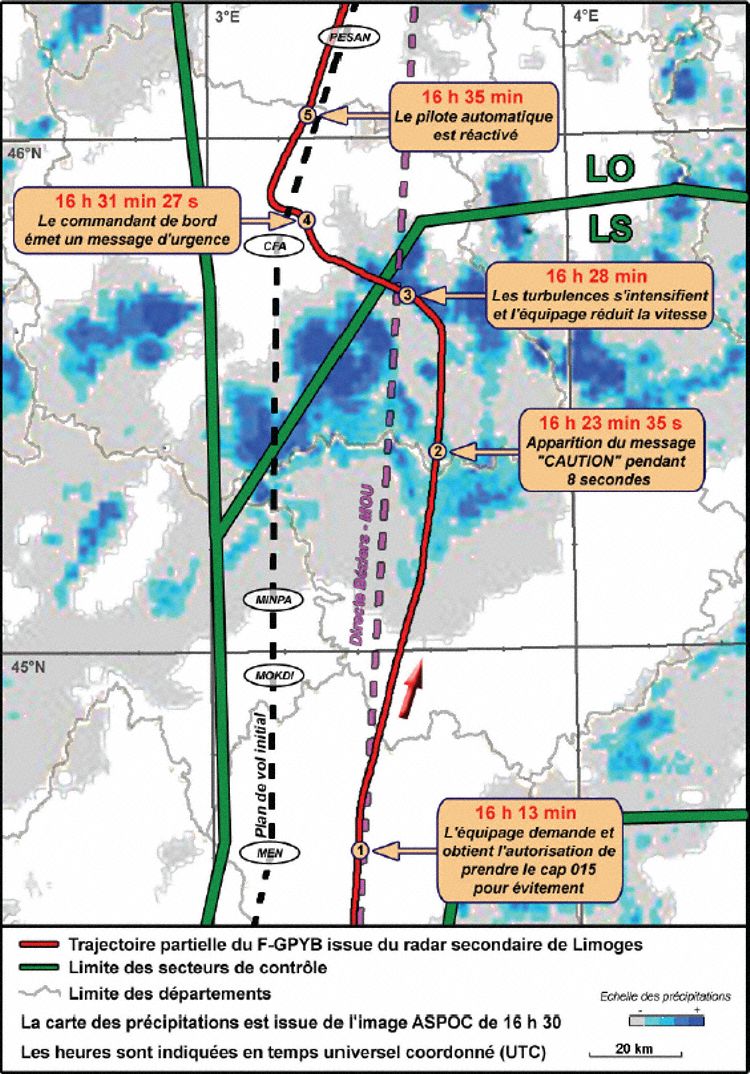
An Airlinair Avion de Transport Regional ATR-42-500, registration F-GPYB performing flight A5-96 from Beziers to Paris Orly (France) with 44 passengers and 3 crew, was enroute at FL180 and 220 KIAS southwest of Clermont Ferrand when the crew observed cumulonimbus cloud ahead. Using the weather radar the crew identified a corridor which permitted them to cross the area. The captain illuminated the fasten seat belt sign and instructed the flight attendant to be seated and requested permission from ATC to deviate from assigned track due to weather. The anti-ice systems are turned on. 4 minutes later the crew recognized severe icing and activated the de-icing systems. Another 2 minutes later the aircraft entered a zone of severe turbulence, 73 seconds later the Master Caution illuminated and the captain noticed the failure of his VOR receiver and his attitude and heading reference system (AHRS), the autopilot #1 disconnected. The captain handed control to the first officers, whose instruments continued working normally. 4.5 minutes after the onset of trouble the crew detected the weather radar was degraded, about 30 seconds later the turbulence intensified causing altitude deviations from +350 to -450 feet, the airspeed fluctuated around 228 KIAS. Although the maximum speed in turbulence per operating manual is 180 KIAS, the checklists for severe icing demanded the engine run at maximum continuous thrust and the aircraft be operated at increased speed. 11 minutes after the onset of trouble the captain declared PAN PAN reporting the loss of weather radar and requested weather to regain visual meteorological conditions as quickly as possible, however, was handed off to the frequence of the next sector. Upon check in with the next controller the controller just acknowledged the hand off, without indicating he had been informed about the PAN PAN, and instructed the aircraft to proceed direct MOU, then was occupied continuously with two other aircraft. 2 minutes after check in the ATR crew finally gets through to the controller again now reporting they were again in VMC and on their track to MOU and cancelled the emergency, the controller replied he was not aware the crew had declared PAN. 15 minutes after the onset of trouble the autopilot was re-engaged, the aircraft got stabilized at FL181 and 208 KIAS and continued to Orly for a safe landing without further incident.
The French Bureau d’Enquetes et d’Analyses (BEA) released their final report in French concluding the probable cause of the incident was:
The difficulty by the crew to set out and follow a plan of action when faced with severe icing associated with severe turbulence while the weather radar was not functioning.
The controllers did not have the means to visualize convective areas on their radar screens disabling them to provide assistance.
The BEA analysed that the conditions of severe icing and severe turbulence made it difficult to adopt a plan, that was consistent with operational requirements compliant with contradicting checklist requirements (reduce speed in turbulence, increase speed in icing). The rapid succession of failures prevented the crew from communicating the failures with ATC.
Had the crew declared PAN earlier it would have prevented the risk of loss of communication, that occurs at a hand off. The PAN call would likely have changed the actions of the first controller although he could not have helped due to lack of weather information on his radar display preventing him to issue vectors to guide the aircraft out of clouds at the quickest way. The BEA annotated that weather information is even less likely to be available with low level center controllers than with high level center controllers.
The crew, after the loss of weather radar, was deprived from information of where the cells were. The captain remembered the last weather radar image received and took a heading to a less disturbed area based on that memory, and that heading eventually led them into calm air.
http://avherald.com/h?article=44446b29&opt=0
L'aereo è questo

Di seguito il report emesso dal French Bureau d’Enquetes et d’Analyses (BEA) su questo 'incidente' dell'estate 2008
Report: Airlinair AT42 near Clermont Ferrand on May 11th 2008, severe turbulence, severe icing and loss of weather radar
By Simon Hradecky, created Monday, Oct 10th 2011 13:41Z, last updated Monday, Oct 10th 2011 13:41Z
An Airlinair Avion de Transport Regional ATR-42-500, registration F-GPYB performing flight A5-96 from Beziers to Paris Orly (France) with 44 passengers and 3 crew, was enroute at FL180 and 220 KIAS southwest of Clermont Ferrand when the crew observed cumulonimbus cloud ahead. Using the weather radar the crew identified a corridor which permitted them to cross the area. The captain illuminated the fasten seat belt sign and instructed the flight attendant to be seated and requested permission from ATC to deviate from assigned track due to weather. The anti-ice systems are turned on. 4 minutes later the crew recognized severe icing and activated the de-icing systems. Another 2 minutes later the aircraft entered a zone of severe turbulence, 73 seconds later the Master Caution illuminated and the captain noticed the failure of his VOR receiver and his attitude and heading reference system (AHRS), the autopilot #1 disconnected. The captain handed control to the first officers, whose instruments continued working normally. 4.5 minutes after the onset of trouble the crew detected the weather radar was degraded, about 30 seconds later the turbulence intensified causing altitude deviations from +350 to -450 feet, the airspeed fluctuated around 228 KIAS. Although the maximum speed in turbulence per operating manual is 180 KIAS, the checklists for severe icing demanded the engine run at maximum continuous thrust and the aircraft be operated at increased speed. 11 minutes after the onset of trouble the captain declared PAN PAN reporting the loss of weather radar and requested weather to regain visual meteorological conditions as quickly as possible, however, was handed off to the frequence of the next sector. Upon check in with the next controller the controller just acknowledged the hand off, without indicating he had been informed about the PAN PAN, and instructed the aircraft to proceed direct MOU, then was occupied continuously with two other aircraft. 2 minutes after check in the ATR crew finally gets through to the controller again now reporting they were again in VMC and on their track to MOU and cancelled the emergency, the controller replied he was not aware the crew had declared PAN. 15 minutes after the onset of trouble the autopilot was re-engaged, the aircraft got stabilized at FL181 and 208 KIAS and continued to Orly for a safe landing without further incident.
The French Bureau d’Enquetes et d’Analyses (BEA) released their final report in French concluding the probable cause of the incident was:
The difficulty by the crew to set out and follow a plan of action when faced with severe icing associated with severe turbulence while the weather radar was not functioning.
The controllers did not have the means to visualize convective areas on their radar screens disabling them to provide assistance.
The BEA analysed that the conditions of severe icing and severe turbulence made it difficult to adopt a plan, that was consistent with operational requirements compliant with contradicting checklist requirements (reduce speed in turbulence, increase speed in icing). The rapid succession of failures prevented the crew from communicating the failures with ATC.
Had the crew declared PAN earlier it would have prevented the risk of loss of communication, that occurs at a hand off. The PAN call would likely have changed the actions of the first controller although he could not have helped due to lack of weather information on his radar display preventing him to issue vectors to guide the aircraft out of clouds at the quickest way. The BEA annotated that weather information is even less likely to be available with low level center controllers than with high level center controllers.
The crew, after the loss of weather radar, was deprived from information of where the cells were. The captain remembered the last weather radar image received and took a heading to a less disturbed area based on that memory, and that heading eventually led them into calm air.
http://avherald.com/h?article=44446b29&opt=0
L'aereo è questo